The first coffee of the day is rarely a casual choice. You have three minutes before your call starts, the kids are looking for their bags or the train is about to leave. That's when the question of capsule coffee versus filter coffee suddenly matters: do you want control and volume, or speed and the same result every cup?
There's no universal winner. Filter coffee can be brilliant if you brew for several people and like playing with beans, grind and brewing method. Capsule coffee suits a household where time, portion size and cleaning up count too. The difference isn't just in the cup, but in everything around it.
Capsule coffee versus filter coffee: the difference at the kitchen table
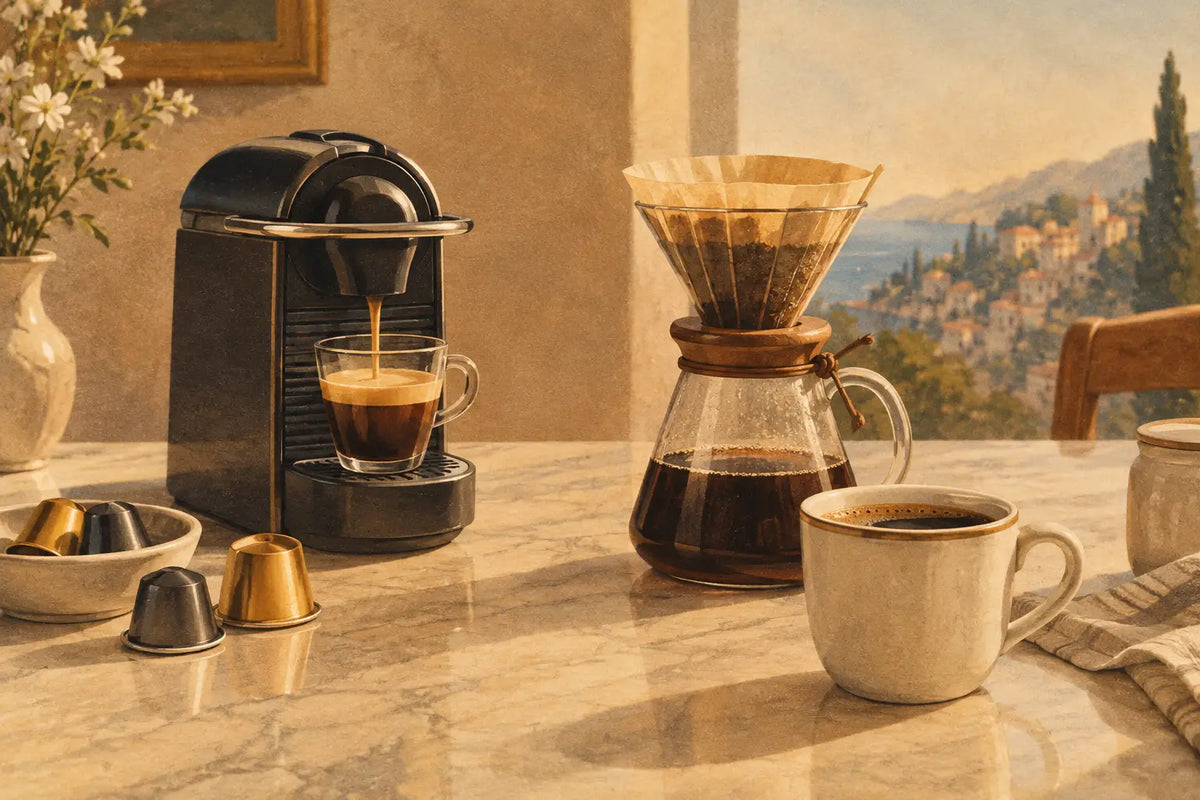
Filter coffee is an extraction at an easy pace. Hot water runs slowly through ground coffee and a filter, usually into a jug or thermos. You decide a lot yourself: the coffee, the grind size, the ratio of water to coffee, the temperature and the brew time. That gives you freedom, but it also asks for attention.
A capsule machine works with pre-measured coffee in a sealed capsule. You pick a capsule, press the button and brew an espresso or lungo with a fixed dose. Fewer variables means less room to play, but also less chance of coffee that comes out weak, bitter or lukewarm from the jug.
So the honest comparison isn't traditional versus modern. It's a choice between two rhythms. Filter coffee is a brewing moment. Capsules are a drinking moment.
Taste: a clear filter profile or concentrated espresso
Filter coffee often leaves more room for nuance in Origins and roast. If you like light Roasts, filter can give you a bright, layered profile. The larger amount of water and longer extraction let you taste calmly what a bean does.
Capsules are made for concentration and consistency. An espresso has body, crema and a clear intensity in a small volume. As a lungo the profile stays approachable, without you having to weigh, grind or adjust anything. That isn't less refined, just a different way of drinking.
One thing does hold: capsule quality varies enormously. A machine won't fix flat coffee. Look at the Roast, Origins, Intensity and freshness of the coffee. If you have a Nespresso* Original machine at home, compatible capsules let you choose a quick espresso without being tied to a single flavour direction.
Filter coffee can win if you like to drink one coffee over a whole morning, or if you serve several cups at once. A well-brewed jug has something calm about it. But leave it on a hot plate for twenty minutes and that calm quickly turns into a flat, bitter finish.
Convenience is more than pressing a button
Capsules win on speed, but the practical advantage is also in the details. No beans to weigh, no grinder to clean and no wet coffee filter to throw away. For one cup between two meetings, that's exactly why so many households use a capsule machine.
Filter takes a few extra steps: measuring water, scooping coffee, placing the filter, cleaning the jug. That doesn't have to be a problem. For some people it's exactly the part where the day begins. But if you only want an espresso after lunch, filter often means more coffee and more washing-up than you need.
Waste also depends on your habits. Brew a full jug every morning for one person and you may drink less than you make. Brew for two, three or four people at once and filter is efficient and logical. The best method isn't the one that costs least on paper, but the one you actually use well.
Consistency versus freedom
With filter coffee you can fine-tune endlessly. A different grind or ratio changes the result straight away. That's appealing if coffee is your hobby, but tiring on a Monday morning when you just want it to work.
Capsules make those choices for you in advance. Every capsule holds the same amount of ground coffee and is designed for a specific volume. The result stays more predictable, even when different people use the same machine.
That consistency is no small detail. In a busy household, a coffee ritual is only a luxury if it doesn't become another chore.
Cost: look beyond the price per cup
Filter coffee is usually cheaper per cup, especially when you buy beans or ground coffee in larger packs. A simple filter machine lasts a long time and filters cost very little. For families, offices or people who drink several big mugs a day, that's a strong argument.
Capsules are generally more expensive per cup. What you get in return is concrete: fixed portions, little preparation and an espresso experience without a separate espresso machine and grinder. The comparison gets fairer when you count what you actually throw away, how much coffee you use each time and how much convenience is worth to you.
Look at the machine too. A filter machine is accessible, but if you want an espresso-like result from filter, it won't happen. Espresso needs different equipment, settings and maintenance. A capsule machine is built precisely for that short, concentrated cup.
Waste: the capsule is the real tipping point
With filter coffee, what's left is mainly coffee grounds, a paper filter and the coffee packaging. That's manageable, although the overall impact of course depends on packaging, quantity and how your waste is processed locally.
With capsules, the discussion is about the material of the capsule itself. Aluminium and conventional plastic capsules need collection and processing to recover their material value. That doesn't always happen as intended.
A 2023 study by Wageningen University & Research compared the circularity of capsule materials. Compostable capsules came out at roughly full circularity when they are actually composted. Aluminium came out at around 48 percent and conventional plastic at around 23 percent. The figures are no licence for thoughtless consumption. But they do show that material and the route after use matter.
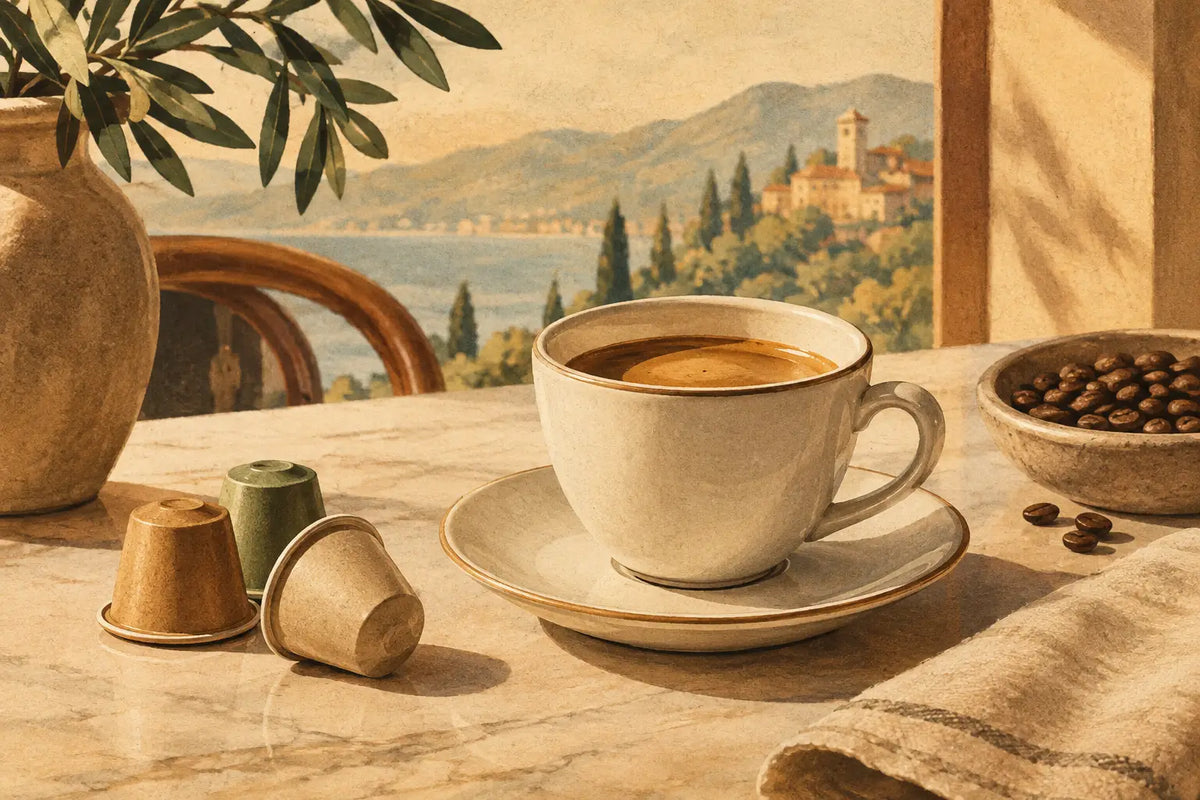
That's why Q Drinks chooses capsules made largely from coffee - coffee chaff - with a bio-based binder. They are compatible with Nespresso Original machines and fully compostable. That's about the material: the cup is made to break down in composting, together with the coffee grounds. Whether it actually ends up there is a separate question: Dutch waste processing isn't yet equipped for compostable capsules. So check your municipality's waste guide and follow what it says.
That's not a detail for the packaging. It decides whether compostability actually means something in your kitchen.
When is filter coffee the better fit?
Choose filter if you often brew for several people, like big cups and enjoy dialling in your brewing method. It's also a strong choice if you want to take a jug of coffee along or turn grinding, smelling and pouring into a slow weekend ritual.
Choose capsules if you mostly make one cup at a time, drink espresso or lungo and don't want loose coffee on the counter. They suit small kitchens, changing morning rushes and households where everyone has a different coffee time. A capsule machine also makes portion control easy: you brew exactly what you want to drink, and with a flexible subscription you always have capsules at home.
Many people don't need to choose at all. A filter machine for Sunday morning and capsules for weekdays isn't a compromise. It's letting your kitchen fit the way you really live.
Choose a system you'll keep using
The best coffee solution isn't the most nostalgic or the most technical. It's the method that suits your taste, your schedule and the way you handle waste at home. If you brew filter coffee with care, you can get a lot of pleasure from it. If you choose capsules with care, convenience doesn't have to mean carelessness.
So don't start with the machine, but with your Tuesday at 08:12. Which coffee can you make, drink and clear away then, without having to build your day around it? That answer is usually clearer than any coffee debate. Don't just drink. Think.