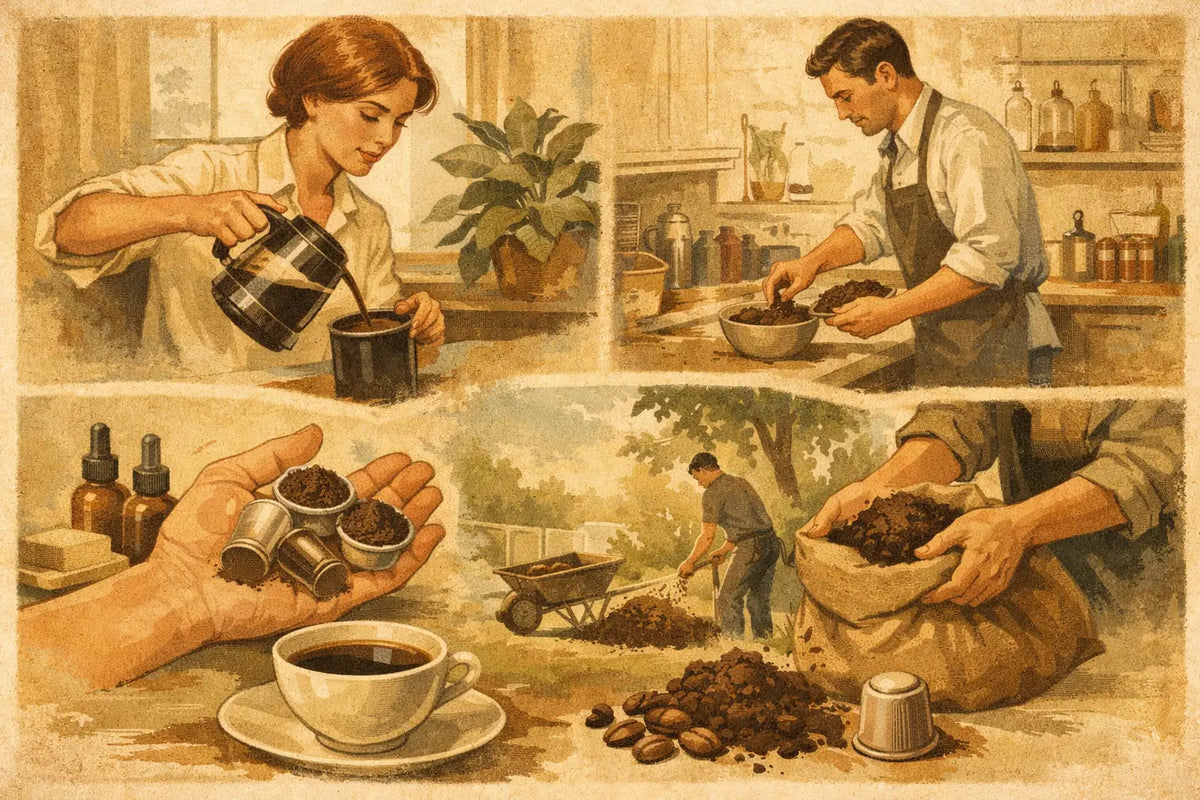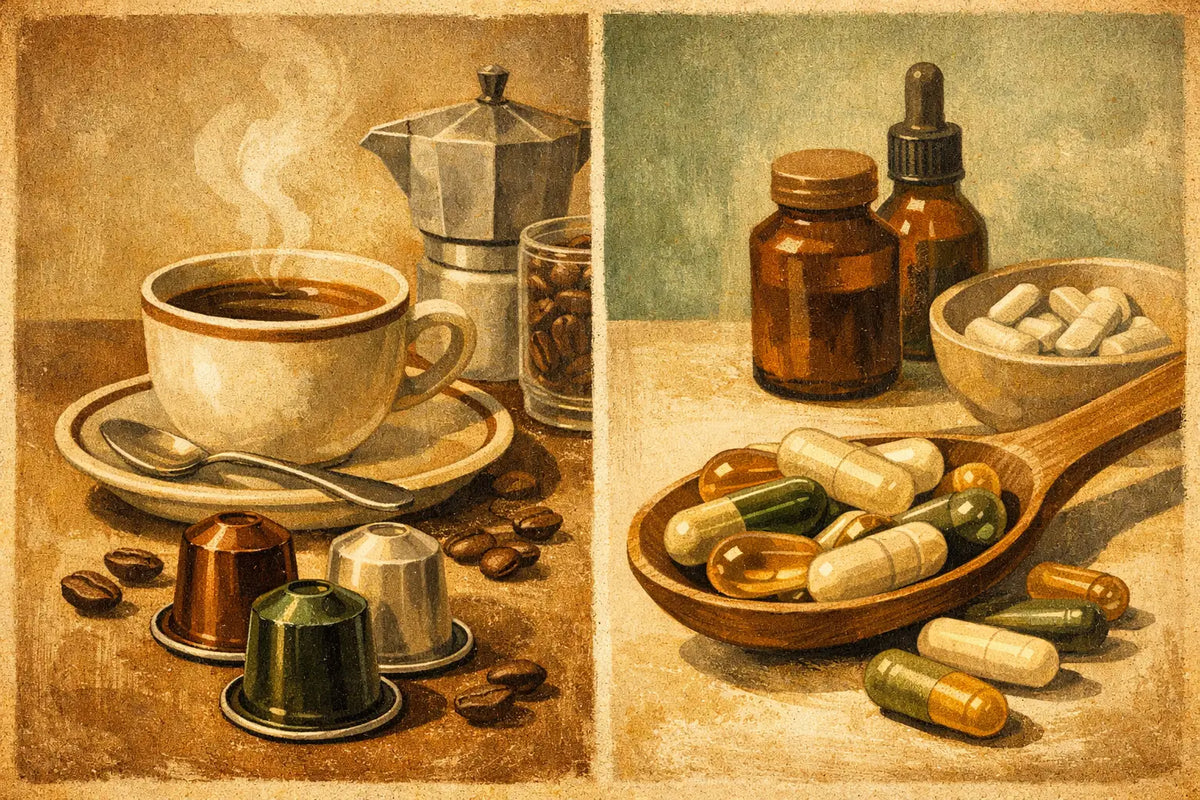

A single capsule is easy to ignore, until you realise how many pass through your kitchen. Coffee chaff innovation cups question exactly that habit. Not by making capsule coffee more complicated, but by redesigning the cup itself: made mostly from coffee, with a bio-based binder, and built for the machine already sitting on your counter.
That is not a cosmetic tweak to a market that revolved around aluminium and conventional plastic cups for decades. It is a different starting point. The packaging does not have to be separate from what you drink.
What are coffee chaff innovation cups?
Coffee chaff is the light, papery skin that comes off coffee beans during roasting. In these cups, that chaff makes up the largest part of the material. A bio-based binder keeps the shape stable and lets the capsule handle the pressure and heat of an espresso machine.
That distinction matters. The cup is not pure coffee, and it is not plastic-free either. It is made mostly from coffee, combined with a bio-based binder. It is exactly that down-to-earth material choice that makes it possible to build a capsule that stays practical in daily use while taking a different route than the familiar aluminium or conventional plastic shell.
So the innovation is not in a trendy outer layer. The cup has to be produced precisely, allow the right flow and protect the coffee until the moment you press start. A nice idea that jams in your machine is not progress.
Designed for the routine you already know
Convenience is still the reason people use capsules. A quick espresso before your first call. A lungo between two meetings. No grinder to dial in, no filter to throw away, no half-open bag of beans going quiet in a cupboard.
That is why these cups are Nespresso* Original-compatible. That last word counts: Original is a different system than Vertuo. If you use a Nespresso Original machine at home, you do not have to change your ritual to make a different capsule choice. When in doubt, always check which system you have before you order.
Machine compatibility is not a detail in this category. It is the line between a good story and a product that genuinely fits your morning. The capsule has to seal, pierce and extract the way you expect. No hassle, no detours.
Why material innovation matters for capsules
With coffee, a lot of attention goes to origins, roast and intensity. Rightly so. But with capsules, the packaging decides a large part of what happens after your coffee. A cup is used for only seconds, while the material can stay in circulation far longer if processing does not line up.
Coffee chaff innovation cups make that tension visible. They combine the speed of single-serve coffee with a material that can be processed through GFT (organic waste) in the Netherlands. That is practical, but not without conditions: compostable does not mean every Dutch municipality already accepts coffee capsules in the GFT bin.
So check your municipality's rules. If it accepts capsules in GFT, that is where used cups belong. If it does not accept them yet, follow the local waste instructions. That is less romantic than a big compostable label, but it is how the system actually works.
The numbers give context. Wageningen University & Research calculated in 2023 that compostable cups, when they are actually composted, can reach a circularity of around 100 percent. Aluminium capsules came out at roughly 48 percent in that analysis. Conventional plastic capsules sat around 23 percent. The result does not say one material performs the same under all conditions. It shows why processing after use matters just as much as the material before it.
The trade-off you should not gloss over
A compostable capsule solves nothing when it ends up in a waste stream that cannot process it. That applies to these cups, but just as much to aluminium: recycling only works if cups are collected, properly separated and actually processed.
Taste calls for precision too. Coffee needs protection from oxygen and moisture. The cup, the seal and the roast have to work together. Material innovation should never serve as an excuse for flat coffee or unreliable extraction. If you choose capsule coffee, you are entitled to expect an espresso with body, a lungo that does not turn watery and a crema that looks the way it should.
That is the real bar. Not less convenience for a better story, but a better system without slowing down your morning routine. Q Drinks builds capsules from that idea: made from coffee and Nespresso Original-compatible, alongside coffee blends and functional capsule variants for different moments of the day.
From chaff to a capsule that can perform
The route from coffee chaff to cup is about control. The material has to be consistent before it can be formed. After that, the capsule has to be strong enough for transport and use, yet still suitable for composting under the right conditions.
That is a tricky combination. Too little firmness and a cup can fail during extraction. Too much focus on the barrier and sustainability stays only a claim on the packaging. The best innovations in this category are almost invisible: you notice them mainly because your machine works as always and you then have a more sensible choice for the used cup.
The design does not need to pretend it is luxury because it is complicated. Premium here is about discipline. Selecting good coffee. Setting down a recognisable roast. Making capsules that perform consistently. And being clear about what the material does and does not do.
How do you choose a cup that fits you?
Do not start with a big sustainability word, but with your own routine. If you use a Nespresso Original machine, system compatibility is the first filter. If you mostly drink short espresso, look at intensity and flavour profile. If you make lungo more often, what counts is how a blend holds up with more water.
Then comes the material. A cup that is made mostly from coffee and can be processed through GFT only has value if your local waste route lines up with it. If you live in a municipality that does not accept capsules in GFT yet, you can still make that choice for other reasons, but be precise about the practice after use.
Finally: do not buy more than you drink. Capsules are made for rhythm, not for a cupboard full of forgotten flavours. A flexible subscription can help if you have set habits, as long as pausing or adjusting is as easy as ordering. Convenience should give room, not create obligation.
The capsule market does not have to go back to zero to move forward. Sometimes change begins with something that fits in your hand, works in your trusted machine and gets a different destination after use. Choose with attention, check your GFT rules and let your daily coffee move along a little more smartly. Don't just drink. Think.