You are standing in front of a rack of capsules, or scrolling through a webshop, and one word is everywhere: compatible. But which capsules actually fit Nespresso, and which ones end up unused in your kitchen cupboard? The answer is not in the flavour name or the colour of the packaging. It is in the system your machine uses.
The main dividing line is clear: if you have a Nespresso Original machine, you can choose from capsules made by different brands for this system. If you have a Vertuo machine, you are limited to capsules designed specifically for Vertuo. The two shapes are not interchangeable.
Which capsules fit Nespresso Original?
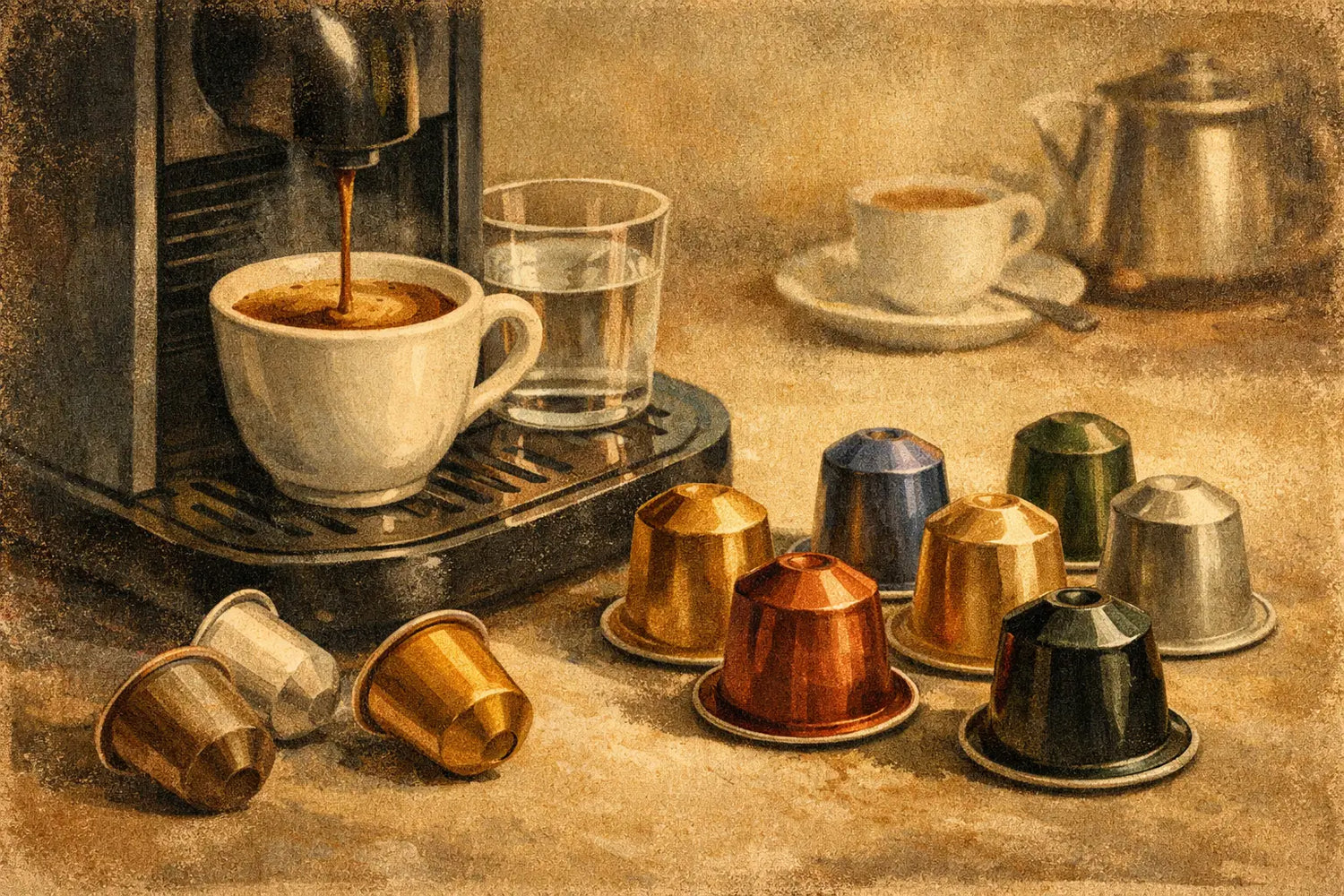
Nespresso Original machines work with the familiar small, cylindrical capsule. Think of models such as Essenza, Pixie, CitiZ, Lattissima, Creatista and Inissia. These machines take capsules that explicitly state they are compatible with Nespresso Original.
That is an open category. Alongside the machine brand's own capsules, there are aluminium, plastic and compostable versions from other suppliers. Q Drinks capsules are also made for Nespresso Original machines. The capsule shape, rim and piercing points have to line up exactly with the brewing group. A capsule that is merely roughly the same size is therefore not automatically suitable.
So always check the compatibility statement on the product page or packaging. Does it only say 'suitable for capsule machines' or 'espresso capsule', without mentioning the Original system? Then that is no guarantee. The compatibility statement needs to be specific.
How to recognise the Original system
The capsule for the Original system is compact and usually has an aluminium or plastic cup with a foil lid. The machine pierces the capsule on both sides and forces water through the ground coffee under pressure. The result is an espresso or lungo, depending on the button you choose.
That system is designed around a fixed capsule size. This is why most compatible capsules work well, provided the producer has developed the shape precisely. With a capsule made from a different material, that technical precision matters even more: the material may feel different, but the machine has to close, pierce and eject it just as reliably.
Vertuo is a different system
A Nespresso Vertuo machine uses wider capsules in various sizes. They have a barcode on the rim that the machine reads to set volume and brewing, among other things. Original capsules do not fit here, not even if you try to place them by hand.
That difference matters in practice. Anyone switching from an Original machine to Vertuo cannot bring their stock of compatible Original capsules along. The same applies the other way around. So check not only the brand and model of your machine, but also which system it uses.
Not sure? Look at the capsule holder. If it is narrow and made for small cylindrical capsules, you probably have Original. If the opening is much wider and you use capsules in several sizes, it is Vertuo. The manual or the model name on the underside of the device gives you certainty.
The material does not change the fit, but it does change your routine
For a Nespresso Original machine you can usually choose between three material directions: aluminium, conventional plastic and compostable capsules. All three can be compatible, but they ask something different of your daily routine after brewing.
Aluminium capsules are often collected separately or processed through specific return streams. That can work well if you use that stream consistently. In practice, though, it is less tidy than the packaging suggests: capsules have to be collected, separated and processed before the material can be reused.
Conventional plastic capsules are light and sturdy, but generally do not belong with organic waste. With compostable capsules it is not only about the material, but also about the local waste rules. In the Netherlands, fully compostable capsules are allowed in the organic (GFT) bin in many municipalities, but not every municipality accepts coffee capsules yet. So check your municipal waste guide before you put them in the green bin.
Wageningen University & Research compared different capsule materials on circularity in 2023. When compostable capsules are actually composted, they come out at roughly full circularity in that analysis. Aluminium scores around 48 percent, and conventional plastic around 23 percent. That is no argument to buy blindly, but it is a reason to look beyond the moment you click the capsule into the machine.
Made from coffee, designed for the machine
Q Drinks makes capsules that are largely made from coffee - coffee chaff - with a bio-based binder. The material is therefore neither aluminium nor a standard plastic cup, yet it still has to perform exactly in a Nespresso Original machine. Compatibility is not an aesthetic promise. The capsule has to seal, handle the pressure and come out of the machine cleanly.
That makes the choice more interesting than 'which material feels the greenest?'. A capsule that does not fit well wastes coffee, time and trust. A capsule that works well and fits how your municipality collects organic waste fits better into a routine you will actually keep up.
Flavour and size: choose your machine first, then your coffee
A common mistake is choosing on Intensity, Origins or branding before you look at compatibility. Understandable: you want an espresso for the morning, a lungo for working from home or something else for after a workout. But the order should be reversed. System first. Then the capsule material. Only then Roast and flavour profile.
With Original-compatible capsules, the amount of coffee is usually tuned to espresso and lungo. A strong capsule does not automatically get better if you pull a large cup from it. Use the lungo setting for a lungo, but stay within the volume that suits the capsule. Too much water thins the coffee and can bring out bitter notes.
The condition of your machine matters too. If capsules leak, get pierced unevenly or are hard to eject, that is not always down to the capsule. A full drip tray, coffee residue around the capsule holder or overdue descaling can cause the same effect. When in doubt, first test with a second capsule from the same box and clean the machine according to the manufacturer's instructions.
A quick check before you order
Before you stock up, check four things:
- Your machine or manual says Original, not Vertuo.
- The capsules are explicitly compatible with Nespresso Original.
- You choose a size that suits espresso or lungo, not a different capsule system.
- You know how your municipality handles compostable capsules via organic waste, if you go that route.
That last step sounds small, but it makes the difference between a good material choice on paper and a routine that also works at home.
When do capsules still not fit well?
Even with capsules that are compatible with Nespresso* Original, there can be exceptions. Very old machines, damaged capsule holders and machines that have not been cleaned for a long time can react more sensitively. A capsule can also drop in a little more stiffly than you are used to without that being a problem. Never force it with the lever. If the machine does not close normally, take the capsule out and check that it sits correctly in the holder.
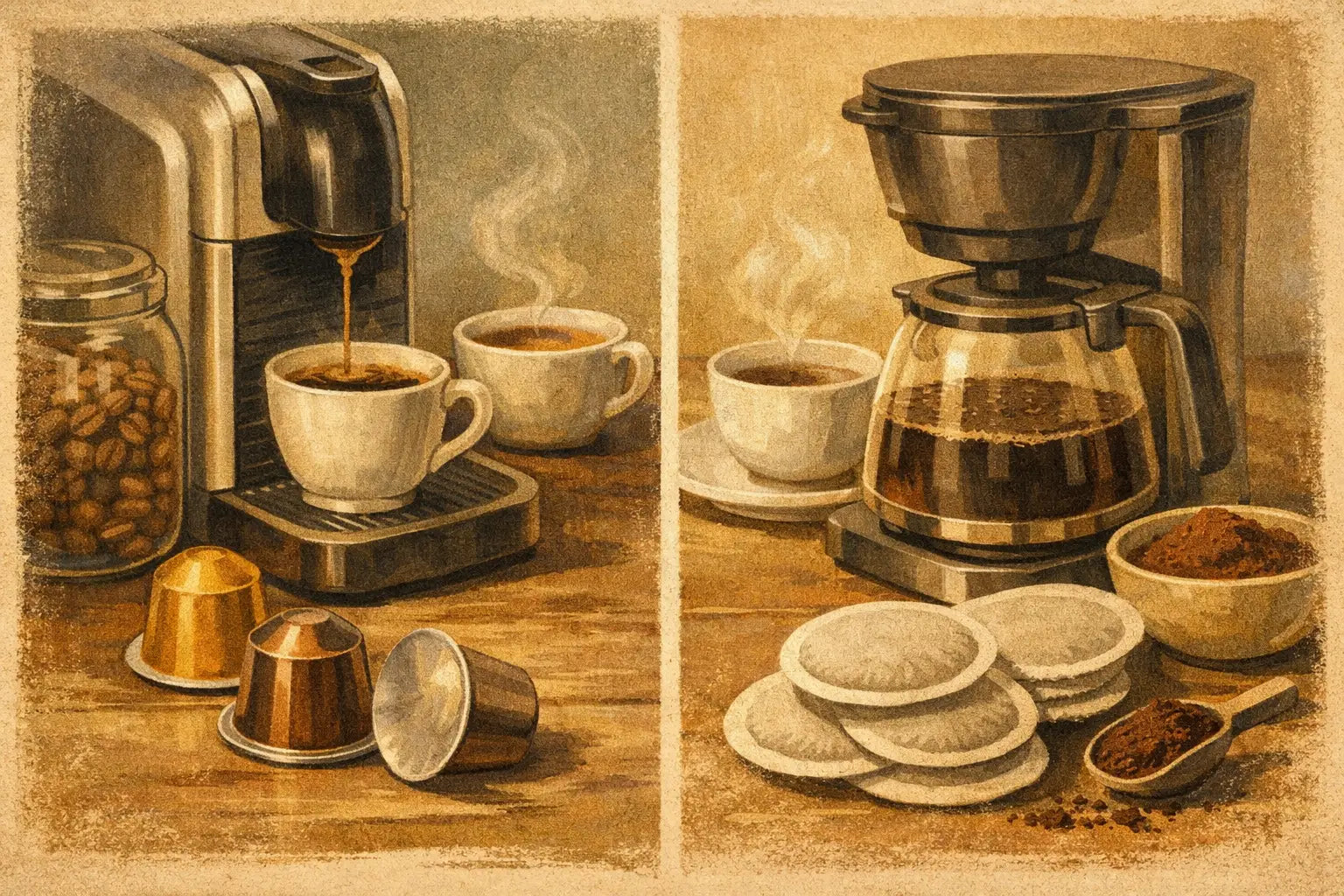
Also be careful with capsules for professional systems, pads, Dolce Gusto-style shapes or capsules for filter coffee. They are sometimes all sold under 'capsules', but technically belong in completely different devices. The packaging may look premium; the shape decides everything.
In the end, the best capsule is not just the one that fits your machine. It is the one that fits how you drink your coffee, throw it away and reorder it. The right shape first. Then the right Roast. The rest gets a lot simpler. Don't just drink. Think.