Your morning isn't a showroom test. On a busy Tuesday you want to press one button, pull an espresso or lungo, and move on. Which capsule machine to choose is therefore less about glossy design and more about a single question: which system fits what you actually drink, throw away and expect?
The capsule market likes to make that choice complicated. Big tanks, milk frothers, twelve drink buttons and promises of barista results distract from the basics. Choose the capsule system first. Only then the machine around it.
Which capsule machine to choose starts with the system
A capsule machine isn't a universal device. The shape, size and technology of the capsule determine which coffee you can use. Anyone who buys a machine first and only then looks at the capsule range can get stuck with tastes, materials or prices that don't fit the daily routine.
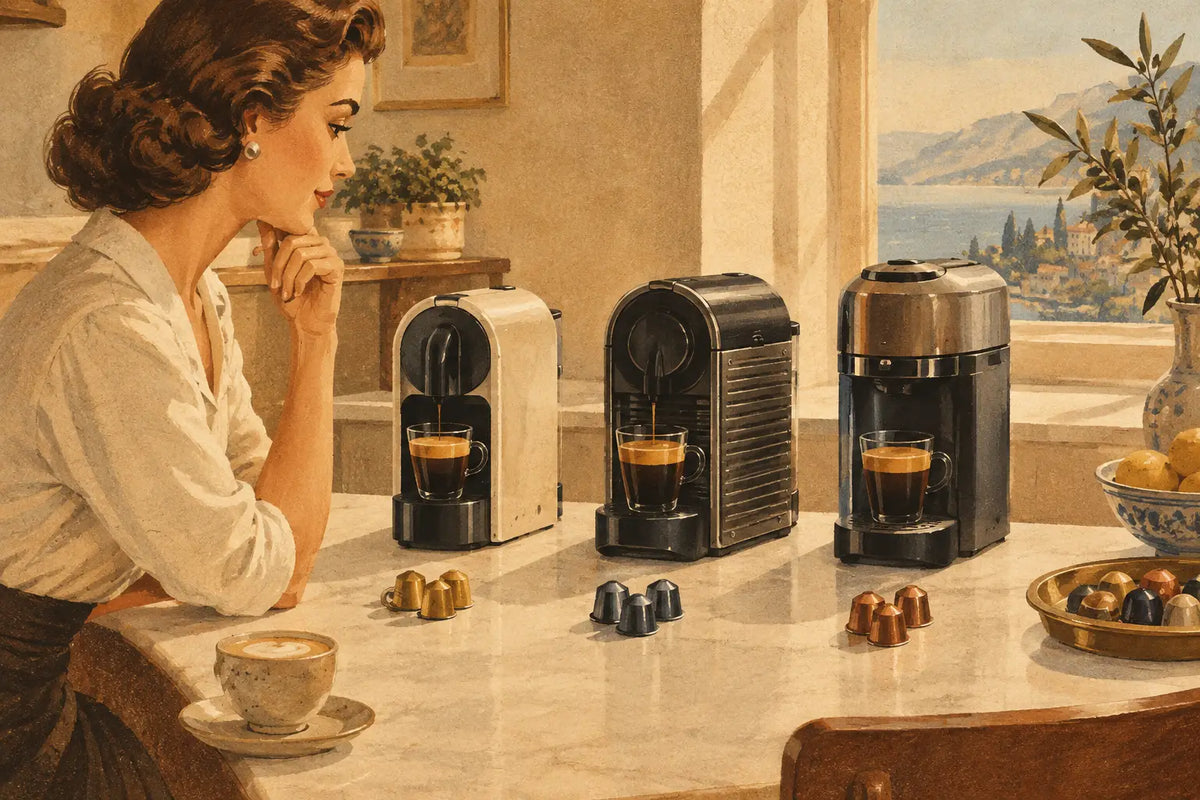
For many households, a machine for Nespresso Original capsules is the logical route. This system is compact, quick to reach temperature and offers a wide choice of capsules. It's meant for espresso and lungo, not for large coffee-house drinks at the push of a button. That's not a shortcoming, but a clear starting point: small format, direct extraction, little fuss.
Other systems more often aim at larger cups or milk drinks. That can be appealing if you routinely drink cappuccino, latte or a full mug of coffee. The downside is often a bigger device, more parts to clean and capsules that only work within one closed system.
So don't ask which machine can do the most. Ask how much of that you'll actually use on an ordinary working day.
Look first at what ends up in your cup
Do you mainly drink espresso after dinner and a lungo in the morning? Then a simple machine with two cup sizes is enough. A model with programmable volumes is handy if you prefer a shorter lungo or always want the same amount of water.
If you regularly drink coffee with milk, there are two routes. A machine with an integrated milk system does everything in one motion, but needs daily attention: rinsing, cleaning parts, storing milk safely. A separate milk frother keeps your machine simpler and gives more freedom to choose regular milk or plant-based alternatives.
For the occasional iced coffee, a separate cold-drink function is rarely decisive. Just pull a short, strong espresso over ice and add cold milk or water. The machine doesn't have to carry out your every idea.
Your household counts too. One person drinking two espressos a day has little use for an extra-large water tank. In a busy family or a small office, a larger tank saves constant refilling. The same goes for the used-capsule container: the more cups, the sooner a small bin becomes annoying.
Espresso, lungo or a large mug?
This is where it often goes wrong. A lungo isn't an espresso you can run endless water through. The taste can turn thin and bitter if you overstretch a capsule. If you want a large mug, you're better off pulling a lungo and adding hot water, making an americano, or deliberately choosing a system designed for larger volumes.
That detail also determines which capsules you buy. Watch Roast, Origins and Intensity, but don't treat Intensity as a taste gauge that works for everyone. It mainly says something about the perceived strength of the blend. A dark Roast can taste intense without automatically containing more caffeine.
The capsule determines more than the machine
The machine lasts for years. Capsules you buy every week or month. That's why the material isn't a footnote, but part of your choice.
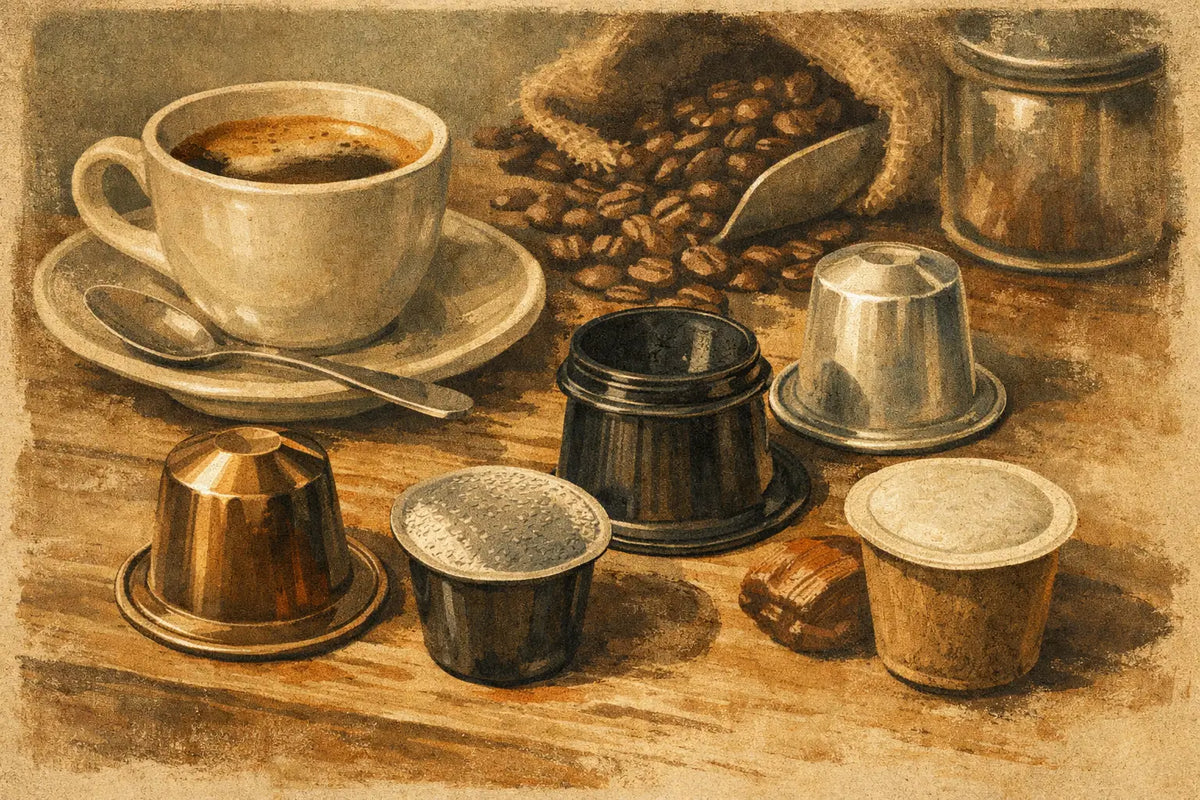
Aluminium capsules protect coffee well and can be recycled if they actually end up in the right stream. That last part requires collection, transport and processing. Plastic capsules face a similar real-world question: what really happens to the material after use?
Compostable capsules offer another route, but the details matter there too. A capsule suited to the Dutch GFT (organic waste) bin belongs there only if your municipality accepts coffee capsules. Municipal rules differ. So check the waste guide instead of sorting on a hunch.
Research by Wageningen University & Research from 2023 makes the difference clear. When compostable capsules are actually composted, they score around 100% on circularity in that study. Aluminium reached 61% in the best scenario, averaging about 48%. Conventional plastic capsules came out at around 23%. Those aren't figures to wave around, but they are reason to look beyond the moment a capsule drops out of the machine.
Q Drinks makes capsules largely from coffee, with coffee chaff and a bio-based binder. They're compatible with Nespresso* Original machines and fully compostable via the Dutch GFT stream where the municipality accepts capsules. A modern system therefore doesn't have to be tied to aluminium or conventional plastic.
Watch the features you feel every day
Once the system is set, choosing becomes manageable. Look at heat-up time, water tank, size, controls and maintenance. A machine that's ready within half a minute makes a noticeable difference on busy mornings. A model that needs a few minutes is fine if you make breakfast first anyway.
Compact machines fit on a narrow counter and are often the best choice for an apartment. Larger models look more luxurious, but take up space you might rather keep free. Don't just measure the width. Check whether you have enough room above the machine to open the capsule compartment and lift out the tank.
An adjustable drip tray is practical for both a small espresso cup and a taller travel mug. Automatic shut-off saves energy without you having to think about it. Programmable cup sizes are relevant if you consistently make the same drink. Touchscreens, colour modes and ten recipes only are if they make your ritual simpler.
Maintenance deserves the same level-headedness. Every capsule machine needs regular descaling, depending on water hardness and use. Choose a device where the water tank and the drip container are easy to reach. If cleaning feels awkward, you'll put it off. And in the end you taste that.
What you'd better not use as your main reason
Don't be tempted by the biggest bundle or the highest number of drink options. A machine with twenty free capsules isn't a good purchase if you then have little choice in capsules you actually want to keep drinking. The same goes for a device that mainly looks good on a product page but turns out too big for your kitchen.
Reviews are useful when they show concrete patterns: leaks, noise, malfunctions, difficult descaling, a fragile lever. One review about a broken device says little. Twenty reports about the same problem say more.
And don't only compare the price of the machine. Look at the cost and availability of capsules over a year. A low entry price can work out more expensive if you have little choice or keep having to place one-off orders. If you have a fixed routine, you may benefit from a flexible subscription you can pause or adjust. If you drink only sporadically, you'll prefer keeping loose stock.
A choice that's allowed to stay small
For most people, the best capsule machine isn't a mini coffee bar. It's a compact, reliable device for the capsule system that fits their taste and waste route. Do you drink espresso and lungo, want a wide capsule choice and like a machine without theatrics? Then choose a simple Nespresso Original-compatible machine with a fast heating system and a water tank that suits your household.
After that, take as much time over the capsule as over the device. Because that's where your taste, your routine and the material you hold in your hands after every cup all live. Don't just drink. Think.