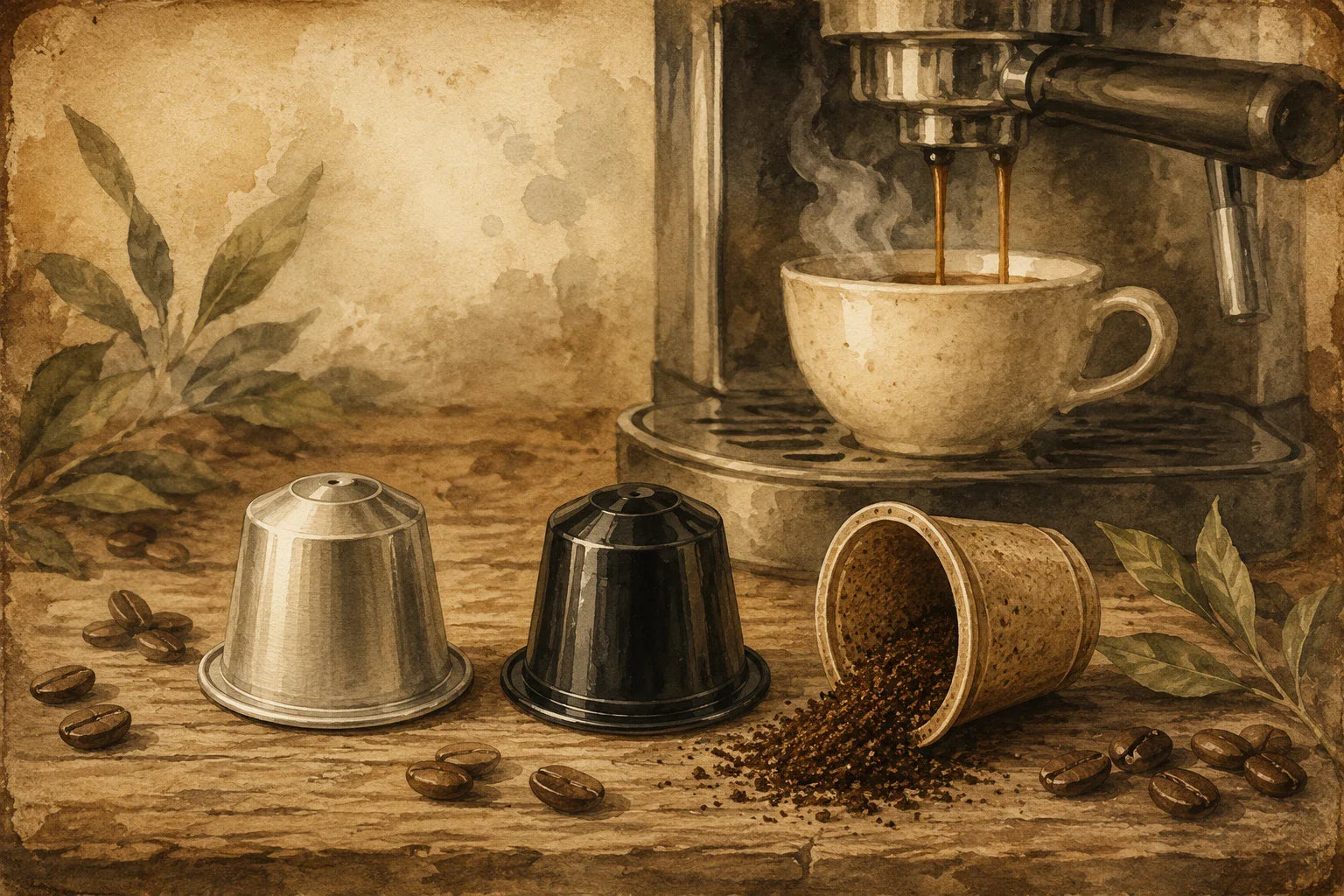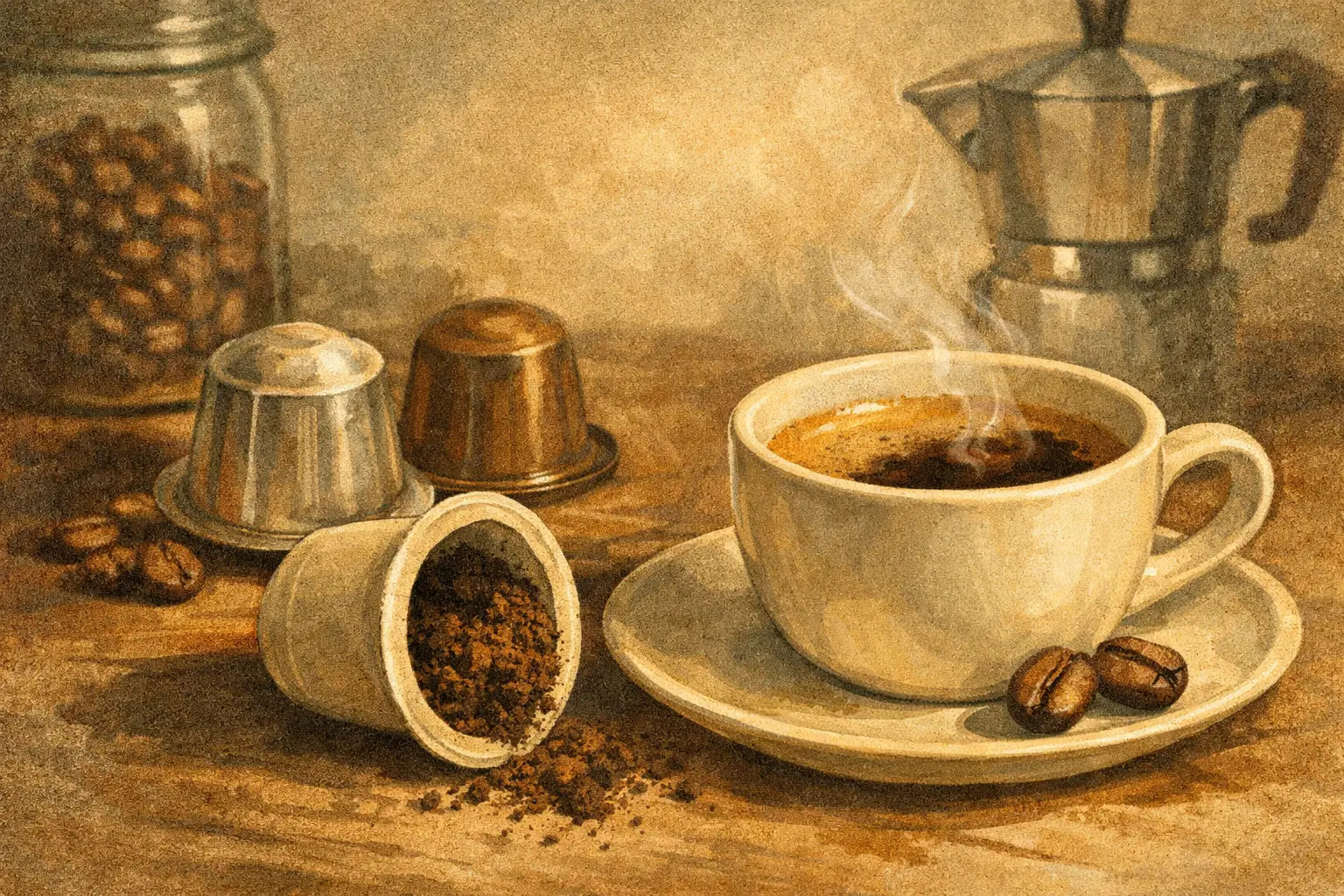
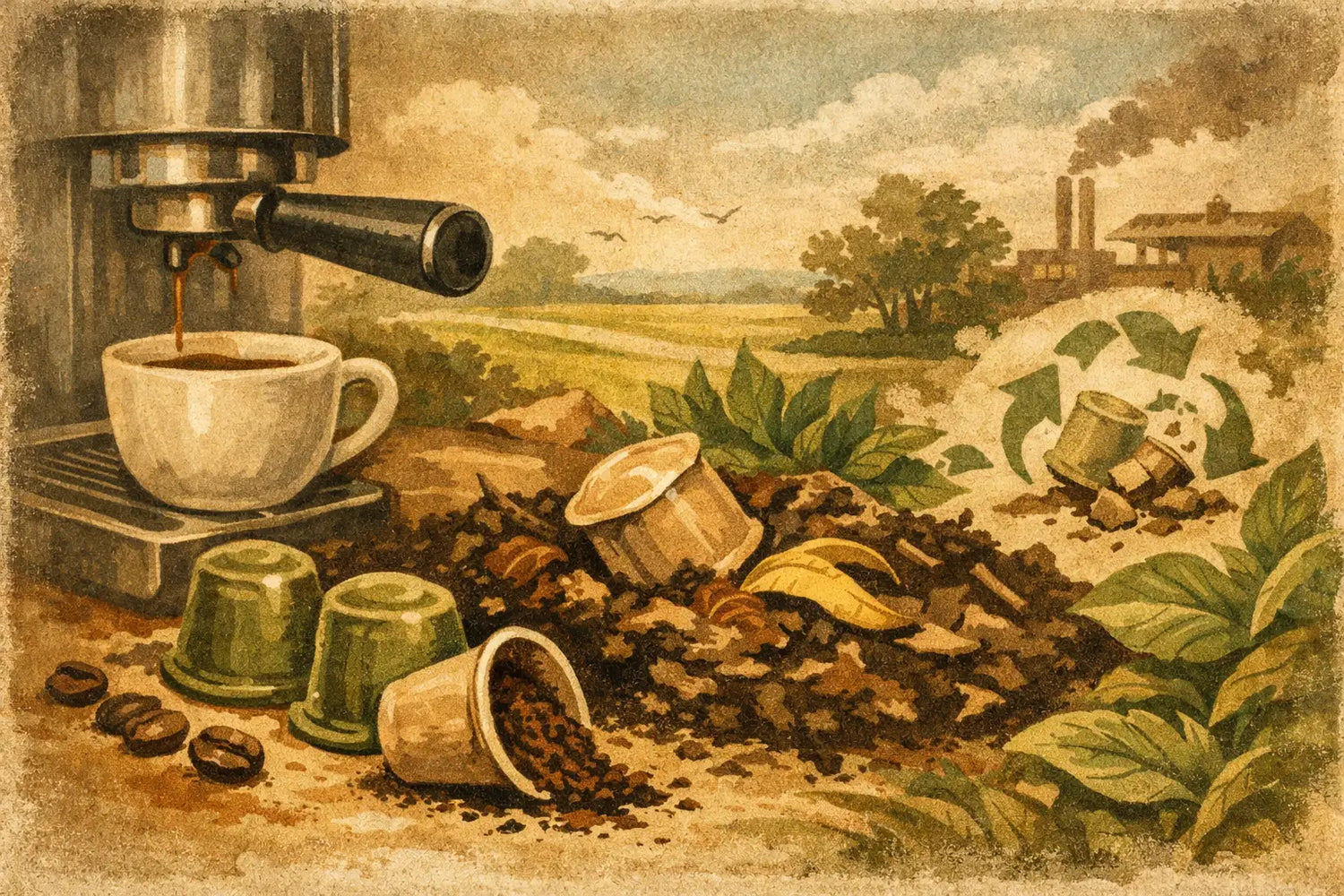
You press a button, have coffee within seconds, and are left with a pod that can stick around for decades. That's exactly where it chafes. Biodegradable coffee pods are popular because they promise a simple idea: the same convenience, but with less waste. The reality is a little less black and white. Not every pod that looks green actually disappears neatly from view.
What biodegradable coffee pods really mean
The term sounds clear, but it's often used too loosely. Biodegradable coffee pods are pods that can be broken down by micro-organisms. In itself, that says nothing about where, how fast and under what conditions that happens. A pod can be biodegradable in an industrial composting facility but perform far worse at home in the organic waste bin or compost heap.
That's exactly the gap between marketing and materials science. Consumers like one clear label. The practice is more complex. Some pods are made from bioplastics, others from paper fibres or residual streams from the food chain. The material determines not only how the pod breaks down, but also how it holds up under pressure, heat and moisture. And that is crucial for capsule coffee.
Why ordinary pods are such a stubborn problem
Aluminium and plastic made the capsule market big. Not because they're beautiful, but because they're functionally strong. They protect aroma, keep oxygen out and are technically easy to produce at scale. The downside is well known: you're using a high-grade material for a contact moment of a few seconds.
Recycling sounds like a solution, but in practice a large part of the market drops out there. Small capsules with coffee residue are hard to sort and are far from always returned correctly. The result is a product category that's convenient for the user but inefficient for the waste chain.
That's why more and more people are looking for biodegradable coffee pods. Not because everyone wants to compost perfectly, but because it feels strange to throw away mini packages every day that outlive the coffee machine itself.
Not every sustainable pod is automatically a good pod
This is where it often goes wrong. A pod can be sustainable on paper but disappoint in use. If it leaks, runs poorly or gives a flat taste, nobody buys it again. Sustainability without performance is not progress. It's a compromise most coffee drinkers are quickly done with.
With capsules, everything has to be right at once. The pod must be sturdy enough for pressure build-up, stay stable in storage and be compatible with machines such as Nespresso Original. At the same time, you want to move away from plastic and aluminium. That's exactly why this category moved so slowly for so long. The technical bar is higher than many people think.
A credible alternative therefore has to do three things at once: brew well, taste good and credibly handle waste better. If one is missing, the whole story collapses.
What biodegradable coffee pods can be made of
The choice of material often tells you more than the front of the packaging. Many biodegradable coffee pods only use bio-based plastics. Those are a real step forward compared to fossil plastic, but they're not fully circular yet. Without the right recycling infrastructure, part of the benefit disappears.
There are also pods largely built on a base of plant fibres or residual materials. That's interesting because it goes beyond substitution. It rethinks what a capsule should actually be: briefly used, functional and logical within a circular system. When a manufacturer can turn residual streams into a capsule that's also machine-proof, the step towards genuinely smarter consumption gets smaller.
That's also where the category gets exciting. Not a slightly greener coat on the same old model, but a different starting point. Less virgin material. Less unnecessary complexity. More use of what already exists.
Taste remains the decider
Let's be honest: nobody keeps buying pods out of moral duty if the coffee itself is mediocre. The best biodegradable coffee pods don't win on guilt reduction, but on total experience. You want convenience without giving up crema, body and aroma.
That makes the category more interesting than many other sustainable alternatives. Coffee is emotion, routine and expectation in one. So a capsule shouldn't just be less bad for the planet - it should also feel good to choose again every morning.
That's why the strongest players in this market don't just talk about waste. They talk about origin, branding, flavour profiles and ease of use. Rightly so. Because sustainability is not a stand-alone product feature. It only works when it becomes part of a better whole.
How to judge biodegradable coffee pods wisely
If you want to know whether a pod is genuinely interesting, look beyond the packaging. Ask yourself what material was used, whether the pod is compatible with your machine, and what realistically happens to it after use. A strong product explains that clearly, without a smokescreen.
Also pay attention to how a brand talks about compostability. Whoever is precise usually has their product development in order too. Whoever keeps everything broad and vague is often mainly selling a feeling. You notice that difference quickly.
And then there's the practical test: does the pod work consistently? A sustainable capsule that runs fine one day and gets stuck the next doesn't fit a busy household. Convenience remains the reason people use capsules. That doesn't disappear because a brand tells a greener story.
The category is finally moving
The capsule market ran on the same logic for years. More convenience, more packaging, more repetition. Biodegradable coffee pods put pressure on that old model, precisely because they show that convenience and material innovation can go together.
Not every brand does that equally convincingly. There are plenty of half-hearted solutions that mainly want to look less bad. But the best innovations show you can think beyond plastic versus aluminium. For example, by using residual streams as a raw material and developing capsules that are designed differently from the ground up.
That's more interesting than a small optimisation. It's a signal that this category no longer has to be stuck in choices from the past. Q Drinks is a sharp example, with capsules made from coffee chaff and a bio-based binder, developed for use in Nespresso* Original machines. That's not a cosmetic update, but a different way of looking at what a pod can be.