You know the moment. Quickly making a coffee between two calls, pod in, press the button, done. Convenient? Absolutely. But when that routine produces plastic or aluminium waste every day, it feels less and less smart. That's why demand for sustainable Nespresso-compatible coffee pods is growing - not as a niche choice, but as the logical next step for people who want convenience without unnecessary clutter.
For years, the capsule market acted as if you had to choose between comfort and conscience. That's outdated. If you buy pods for a Nespresso Original* machine today, there are options that go far beyond a different colour of packaging or a green label on the box. The real question is not whether a pod claims to be more sustainable, but in what way exactly.
What makes sustainable coffee pods genuinely more sustainable?
Not every "green" capsule is automatically a better choice. With coffee pods, sustainability usually comes down to four things: material, end of life, production impact and user experience. Only when those line up do you have a product that genuinely moves the category forward.
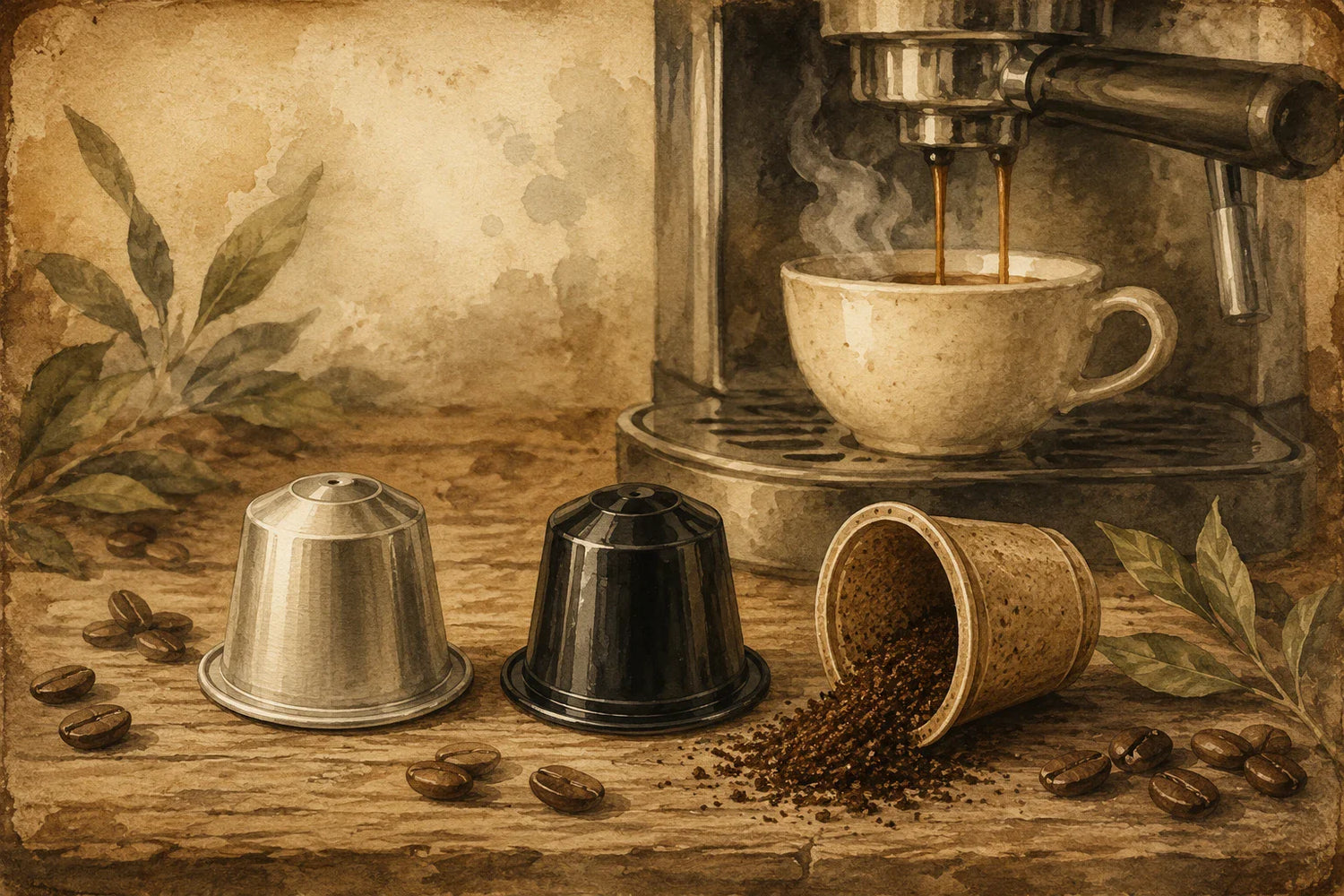
Material is the first test. Traditional capsules are usually made of aluminium or plastic. Aluminium is technically well recyclable, but only if it's correctly collected, separated and processed. In practice, that often doesn't happen. Plastic scores even worse, especially with small food packaging containing coffee residue. So a capsule can be called recyclable while a large share still ends up in residual waste.
That's why more and more people are looking at compostable alternatives. There's nuance there too: not every "compostable" pod actually is. A pod that is fully compostable belongs in the organic waste after use, together with the coffee grounds. So it pays to look beyond the claim on the front.
Then there's production impact. A capsule made of virgin aluminium with a heavy production process and a long logistics chain is something else entirely than a pod designed around residual streams or bio-based materials. That's exactly where real innovation starts.
Why the capsule's material changes everything
The biggest leap forward is letting go of plastic and aluminium as the standard. That sounds simple, but it's precisely where the market stayed stuck for years. A slightly better package isn't enough if the core of the product is still based on materials you'd rather not use for a few seconds of coffee.
Bio-based capsules make the difference here, especially when they're not just plant-based but also designed intelligently for circularity. Think of pods made from residual materials from the coffee chain itself. That's far more interesting than pouring sustainability over the top as a marketing layer. You're using waste as a raw material, reducing dependence on virgin resources and making the capsule itself part of the solution.
That doesn't mean every alternative is automatically perfect. Bio-based material has to be strong enough, handle heat and protect the coffee against oxygen. Otherwise you give up taste, freshness or machine performance. And that's exactly where many consumers drop out. Sustainable is nice, but nobody wants a weak espresso or a leaking capsule.
Compatibility is not a detail, it's a hard requirement
For anyone already using a Nespresso Original machine, compatibility is non-negotiable. A sustainable capsule that gets stuck, runs poorly or fouls the machine is not going to win. Ease of use remains the foundation.
Good sustainable Nespresso-compatible coffee pods therefore have to do more than look neat on paper. They simply have to work. No hassle, no trial and error in the morning, and no guessing whether your machine can handle it. That sounds obvious, but in a category where many alternatives fall short on performance, it's a deciding factor.
The best choice is usually not the capsule with the loudest claim, but the one that gets three things right at once: less waste, reliable compatibility and coffee you want to drink again.
Taste remains the real litmus test
Let's be honest: nobody keeps buying a sustainable capsule out of duty alone. If the taste is flat, the crema thin, or the finish bitter in the wrong way, you're done quickly. Especially when you're used to a daily coffee ritual that has to be fast and good.
That's also why premium positioning matters. More sustainable pods shouldn't feel like the well-behaved alternative. They should simply be seriously good. Think distinct flavour profiles, good intensity, aromatic complexity and consistent extraction. That's exactly where a brand stands out - or falls through.
For many consumers this is the tipping point. As soon as a compostable or bio-based pod delivers the same or better taste than the classic capsule, the last reason to stick with old materials disappears. Then sustainability stops being a concession and becomes an upgrade.
What to look for when buying sustainable Nespresso-compatible coffee pods
The market loves big words. Eco-friendly. Green. Conscious. But if you really want to choose wisely, look at the concrete details behind the claim.
First, check the material of the capsule itself. Is it made of plastic, aluminium or a bio-based alternative? Then look at what happens after use. Is the pod fully compostable and therefore belongs in the organic waste, or only theoretically recyclable through a separate system? That difference matters.
Next, check machine compatibility. Not "fits most machines", but specifically suitable for Nespresso Original. That gives more confidence and prevents frustration. And finally: look at the coffee itself. Where does it come from, how is the taste described, and does the product feel premium or mostly virtuous? If the latter dominates, that's rarely a good sign.
Compostable means back into the cycle
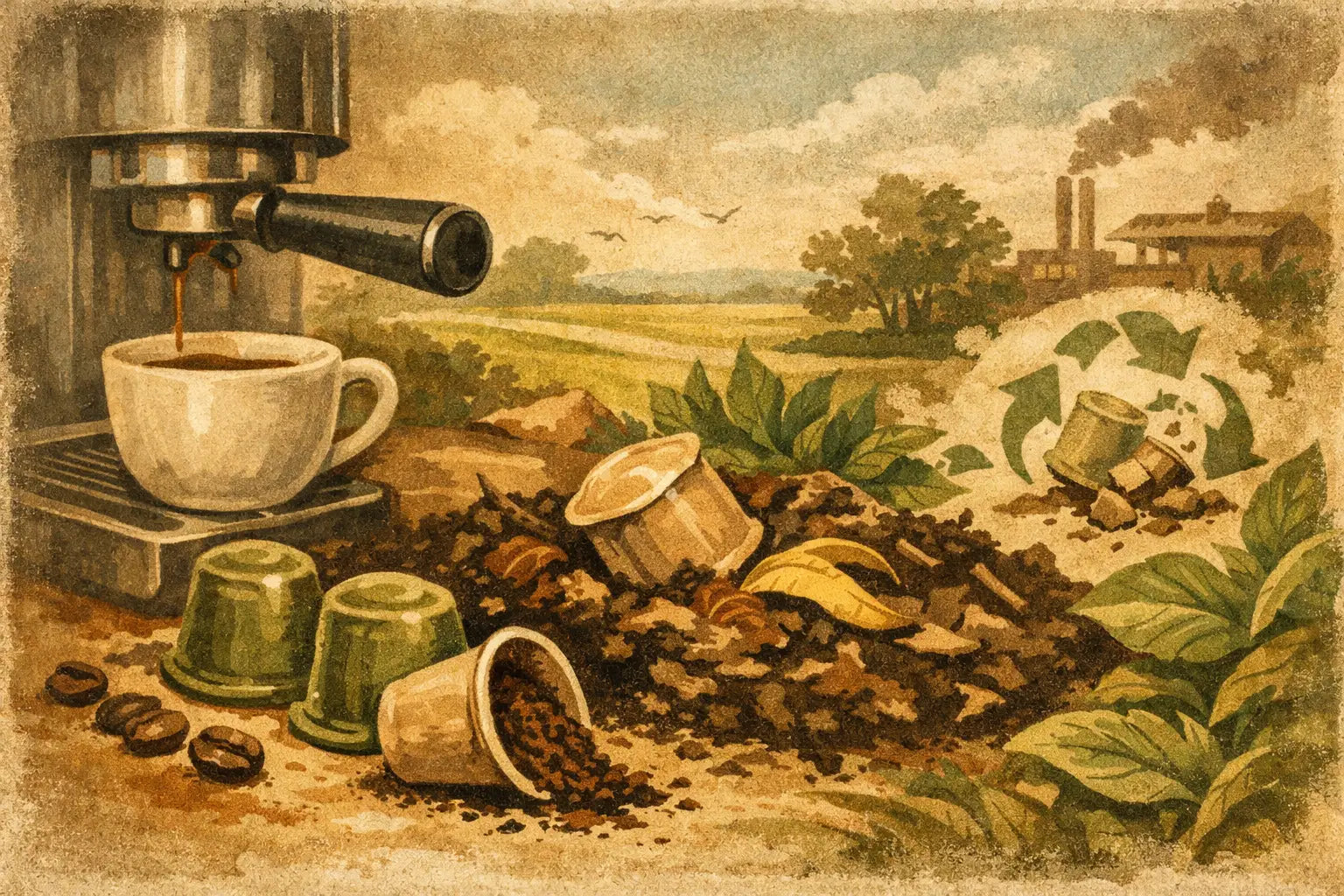
Compostable capsules appeal to many people because they have a clearer end-of-life story than plastic or aluminium. A pod that is fully compostable belongs in the organic waste after use, together with the coffee grounds - where aluminium and fossil plastic don't.
For most households the route is actually simple: the organic waste bin is made for organic material, and that's where a fully compostable capsule belongs. The material decides the bin, without hassle.
The smartest innovations go a step further by using materials that are not only compostable but also follow logically from circular design. A capsule based on coffee residual streams, for example, feels fundamentally different from a traditional product with a slightly greener ending.
More than coffee: why the capsule category is being broken open
There's something else going on. People don't just want a better capsule for espresso or lungo. They're also looking for products that fit how they live: functional blends, focus moments, energy for sport, or a conscious routine without unnecessary ingredients.
With that, the capsule shifts from a pure coffee format to a broader daily ritual. That makes sustainability even more relevant. Because if you use capsules more often and for more moments, the material question gets bigger, not smaller. Then you want a system that delivers convenience without leaving a trail of packaging waste.
This is exactly where you see which brands really understand the market. Not another standard pod with a green story, but a new idea of what a capsule can be - in taste, function and material. Q Drinks fits that movement, because it shows that innovation doesn't have to stop at a compostable exterior.
Is switching always worth it?
For most Nespresso Original users, yes - but it depends on your priorities. If price is the only criterion, traditional capsules can still be tempting. Old systems scale cheaply. But cheap per cup is not the same as smart in the long run.
If you value less waste, modern materials and coffee that still feels premium, switching makes sense. Especially if you already feel uneasy about disposable aluminium or plastic capsules. You're not looking for perfect idealism, but a better system that fits how you actually live.
And yes, it remains important to look closely. Not every sustainability claim is equally strong. Not every compostable pod works equally well. Not every bio-based capsule tastes like one you'd choose again tomorrow. But that's exactly why the category is getting more interesting. The bar is higher.
The best capsule isn't the one that shouts loudest about being green. It's the one that shows convenience, taste and less waste can go together just fine. When your morning coffee pulls that off, the whole routine suddenly feels a lot better.