A capsule is small. The choice behind it isn't. Anyone looking for the best compostable capsules in the Netherlands usually wants three things at once: good coffee, a capsule that simply works in the machine, and less material ending up as residual waste after a single espresso. That sounds logical. Yet taste, machine fit and compostability still too often pull in different directions in this category.
The best choice, then, isn't simply the capsule with a green look or a big compostable sticker. Look at what's inside, where the capsule can go after use, and how it performs under pressure. Because convenience without compromise is exactly what capsule coffee should be about.
What makes a capsule truly compostable?
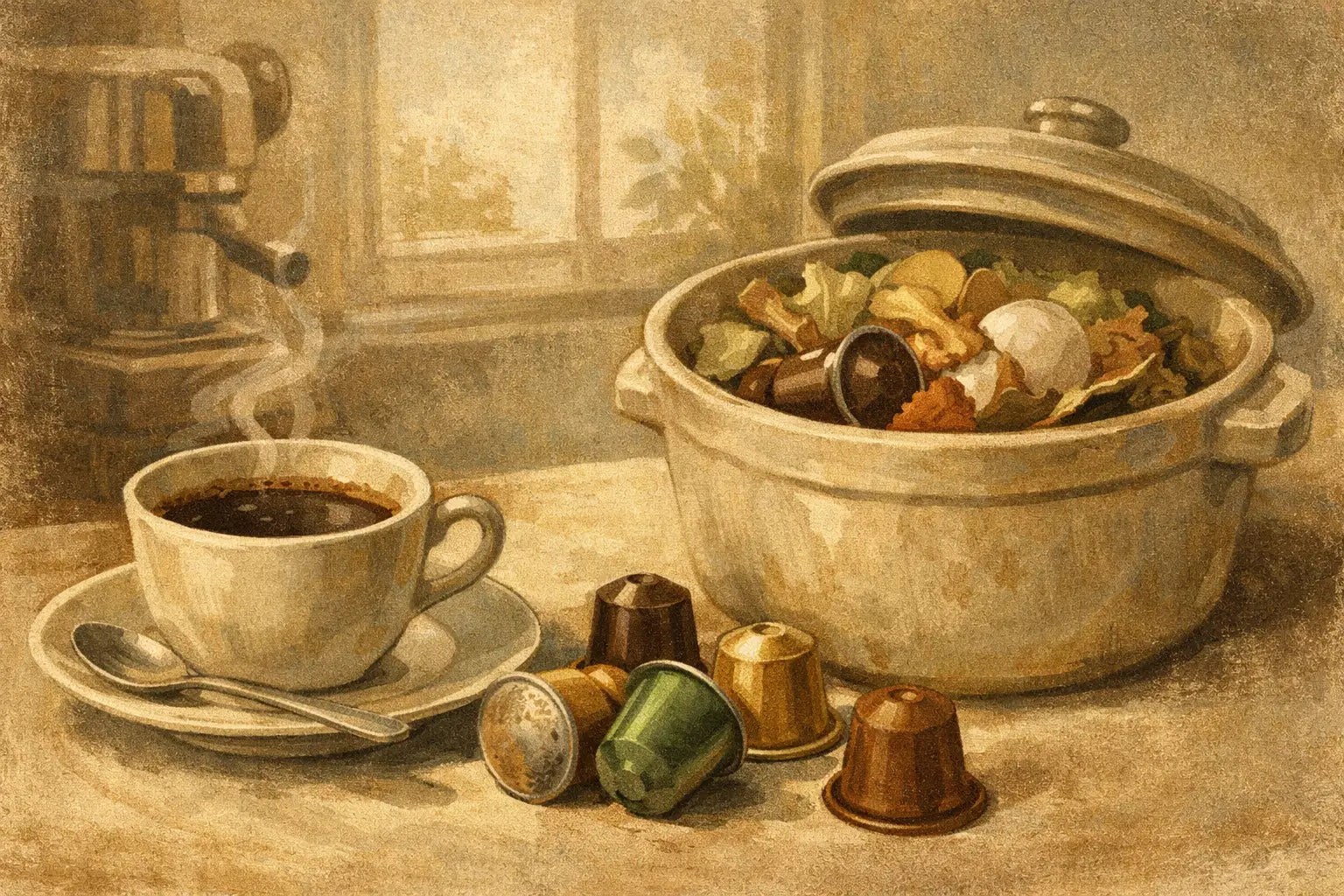
Compostable isn't a decorative word. It says something about what can happen to a capsule after you've brewed your coffee. A genuinely compostable capsule goes into the organic waste (GFT) bin together with the coffee grounds after use, where it's processed into compost. No separate return stream, no drop-off point, no extra step.
Pay attention to the material story too. An aluminium capsule is recyclable, but only when it's actually collected and processed separately. In many systems that's an extra task: collecting, sending back or dropping off. Plastic capsules follow yet another route, depending on the type of plastic, contamination and local separation. Where aluminium and plastic demand those extra steps, a fully compostable capsule doesn't.
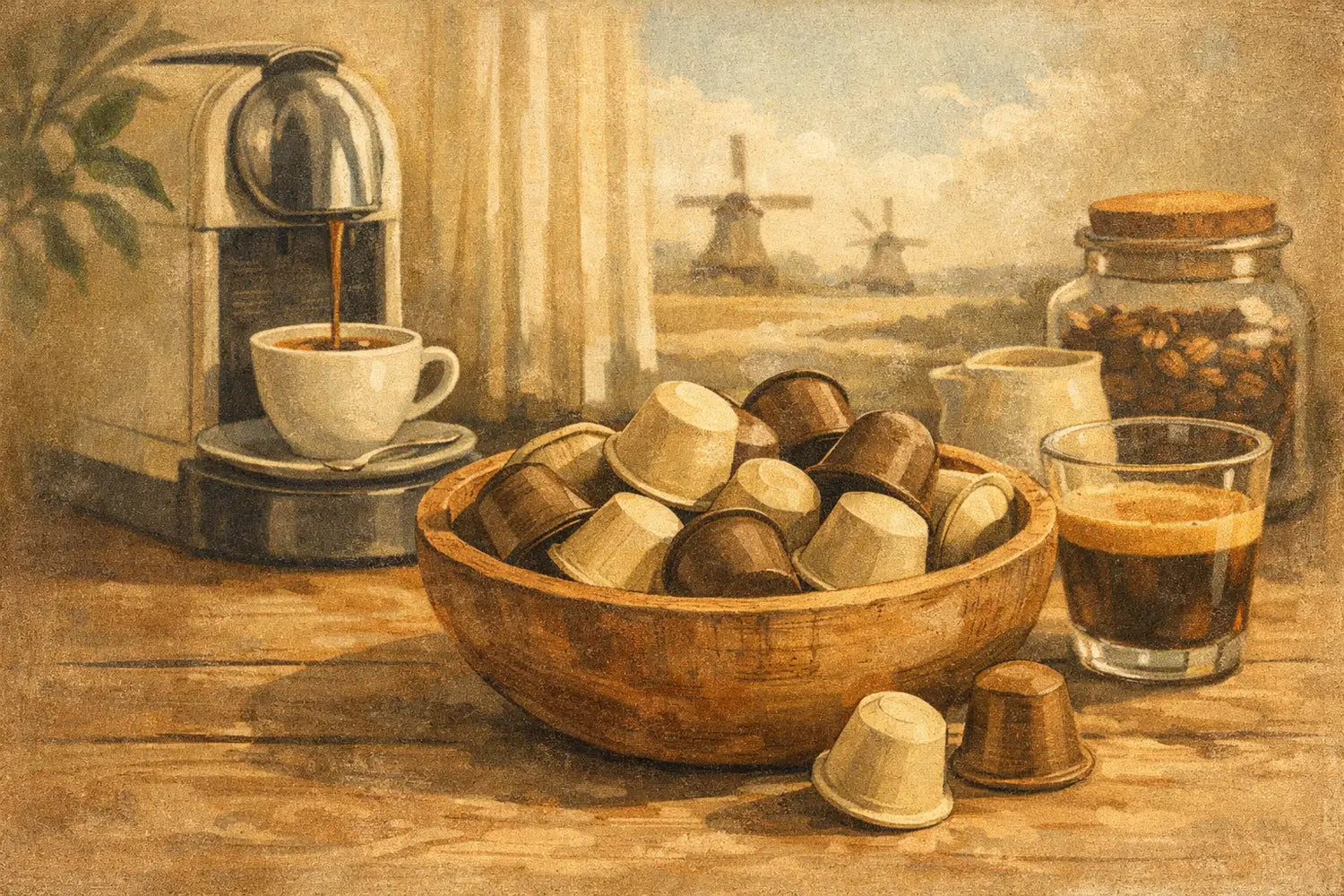
A compostable capsule takes a different route. At Q Drinks the capsule is made from coffee - coffee chaff with a bio-based binder - and fully compostable. After use it goes into the organic waste bin along with the coffee grounds, where aluminium and conventional plastic can't. Not as a moral lesson, but as a more logical design.
Best compostable capsules in the Netherlands: four points to compare
Comparing capsules, you can get lost in claims forever. These four questions bring the choice back to what you notice every morning.
- Does it fit your machine? Always check that the capsule is compatible with your system. For anyone with a Nespresso* Original machine that fit is essential: a capsule has to pierce properly, stay stable under pressure and eject without fuss.
- How does the coffee taste as an espresso and as a lungo? A capsule that only holds up in a short espresso isn't right for everyone. Look at Roast, Origins and Intensity, but above all at the brewing style you actually use.
- What happens after use? A fully compostable capsule can go into the organic waste bin along with the coffee grounds. "Compostable" on the packaging alone isn't enough: the material has to live up to that promise.
- Is the material story concrete? Good brands tell you clearly what their capsule is made of. Vague terms like sustainable or eco say little without material, processing and practical instructions.
That last point deserves attention. A compostable capsule doesn't have to pretend it vanishes into thin air. It should be transparent about what it's made of and where it can go after use. That's more credible than a big green story that ends at the bin.
Taste remains the first test
Sustainability is no excuse for flat coffee. The capsule still has to deliver a clear espresso, with body, balance and a crema that suits the chosen Roast. That starts with the coffee itself, but the capsule plays its part. The way water runs through the coffee determines whether your cup is tight and layered, or watery and messy.
So don't choose blindly on Intensity. A high Intensity doesn't automatically mean your coffee tastes better or stronger. It can point to a darker Roast or a more pronounced profile. Someone who loves chocolatey, full-bodied notes chooses differently from someone after a fresher, lighter Origins selection.
Starting small is smarter here than buying a big stock straight away. Try the different flavours first as an espresso and then as a lungo. Drink it black, but also try it with milk or a plant-based alternative if that's your regular ritual. A capsule should fit your kitchen, not just a product page.
Compatibility is more than the right shape
A compatible capsule for Nespresso Original has to do more than physically fit the holder. It has to work consistently in a machine that uses hot water and pressure. If the capsule is too fragile, extraction can become irregular. If it's too stiff or off-size, the machine can jam.
This is exactly why material innovation in capsules is hard. Aluminium and conventional plastic don't dominate the market because they're exciting, but because they're technically predictable. An alternative has to deliver the same everyday reliability without falling back on that old standard.
So test a new capsule with the routine you already have. Use your own machine, your usual cup size and the same amount of water. You don't make a fair comparison at a trade-show stand, but on a Tuesday morning when you're in a hurry.
Look honestly at circularity
The difference between recyclable and compostable isn't just semantics. It's about the chance that material actually gets a useful destination after use. Wageningen University & Research studied this in 2023 for coffee capsules. When compostable capsules are actually composted, they came out at around 100% circularity. Aluminium sat at around 48%. Conventional plastic came out at roughly 23%.
Those figures are no reason to label every aluminium capsule as wrong. Aluminium can be recycled well, but the result depends heavily on collection and processing. A fully compostable Q Drinks capsule takes a simpler route: after use, straight into the organic waste bin with the coffee grounds.
So the relevant question isn't which material sounds best on paper, but which route works in practice. Wageningen University & Research, 2023, research into the circularity of coffee capsules, makes clear why that practice matters.
The bin should be part of your choice
Is your organic waste bin within reach? Then a compostable capsule is a remarkably simple routine: brew your coffee, let the capsule cool if needed, and toss it into the organic waste with the coffee grounds. No saving up empty capsules in a bag. No separate return stream. No doubt about whether a small capsule really gets recycled.
That's the difference with a capsule you first have to collect, hand in or have picked up. A fully compostable capsule connects to a waste stream you already have at home. That's less spectacle than a big sustainability claim, but it's how progress works: a good product and an ending that makes sense.
For households that use a lot of capsules, this counts extra. One capsule feels negligible. Hundreds of capsules a year don't. Precisely with a habit you repeat daily, the material around the coffee is part of the taste of the choice.
When is a compostable capsule the best choice?
A compostable capsule is the best choice when three things come together: it gives the taste you want, works reliably in your machine, and is fully compostable in the organic waste after use. At Q Drinks those three come together in the coffee subscription, with capsules made from coffee.
If you mostly want convenience, you benefit from a capsule that fits the right waste stream without an extra return step. If you take coffee seriously, taste first. And if you're wondering whether material matters, you don't need to make a grand statement. Just choose a ritual that adds up, from the first press of the button to where the capsule ends up.
Don't just drink. Think.